Melbourne: a city built in layers of history, river and memory
When you walk through Melbourne today — along the Yarra, over polished bridges, through green parks and quiet pockets of shade — it’s hard to imagine that this city didn’t exist in its current form less than two centuries ago. And yet, Melbourne’s story begins far earlier than its official founding date.
Long before Melbourne: the Land of the Kulin Nation
For thousands of years before the first Europeans arrived, this land was home to the peoples of the Kulin Nation, including the Wurundjeri and Boon Wurrung. They lived with the seasons, cared for the land sustainably and held a deep spiritual connection with Birrarung — the river we now call the Yarra.
This region was rich in food, water, meeting places and ceremonial sites. The landscape we now call a city was, for them, home, identity and history woven into one living place.
The accidental name “Yarra”
When European explorers first saw the river in the early 19th century, they asked for its name. The Woi Wurrung word for flowing water was misheard, and so the name Yarra River was recorded — a misunderstanding that was never corrected.
1835: when the modern city begins
Modern Melbourne officially began in 1835, when Tasmanian entrepreneur John Batman attempted to negotiate a controversial land deal with the Wurundjeri. That agreement was later deemed invalid, but it opened the door for the first European settlement.
Soon after, John Pascoe Fawkner arrived with his group of settlers and built the first permanent structures. Batman and Fawkner are now considered the city’s founders — though their stories are closely tied to loss, displacement and deep change for the First Peoples of this land.
From camp to chaotic village
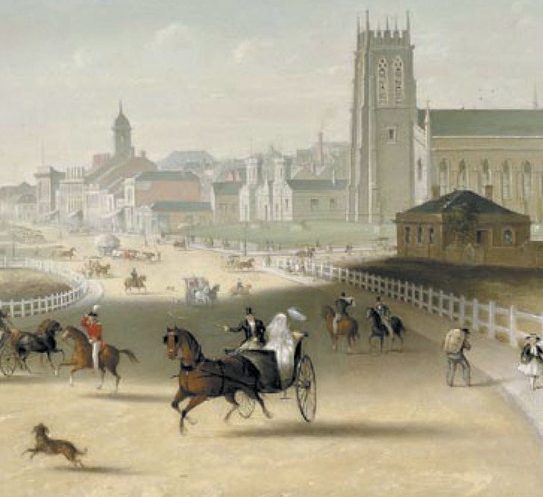
Within just a few years, the settlement grew rapidly. Ships arrived. Streets appeared where bushland once stood. Simple huts were replaced by timber houses. The first cafés, shops and markets emerged.
Melbourne felt lively and raw — mud, noise, ambition, movement and optimism all layered together.
The gold rush changes everything
Melbourne truly transformed after 1851, when gold was discovered in Victoria. People arrived from all over the world. Money quite literally flowed through the streets, and with it came grand banks, ornate Victorian buildings, wide boulevards lined with theatres, shops and churches.
In less than thirty years, Melbourne became one of the wealthiest cities in the world. You can still see the elegance of that era in balcony railings, decorative facades and stately avenues.
From wealthy city to modern metropolis
Melbourne continued to grow — layer upon layer. Today, the city breathes creativity, sport, food, art and an effortlessly relaxed coffee culture. And beneath all that modern energy lies the deeper story of the land where everything began.
Why Melbourne’s story stays with me
Perhaps Melbourne fascinates me so much because it is a city of layers. A place where thousands of years of Aboriginal history meet colonial ambition, gold-rush wealth, modern design and that unmistakably Australian calm.
Every street, every tree, every curve of the river belongs to that story. And the more you learn about it, the richer the whole city becomes.