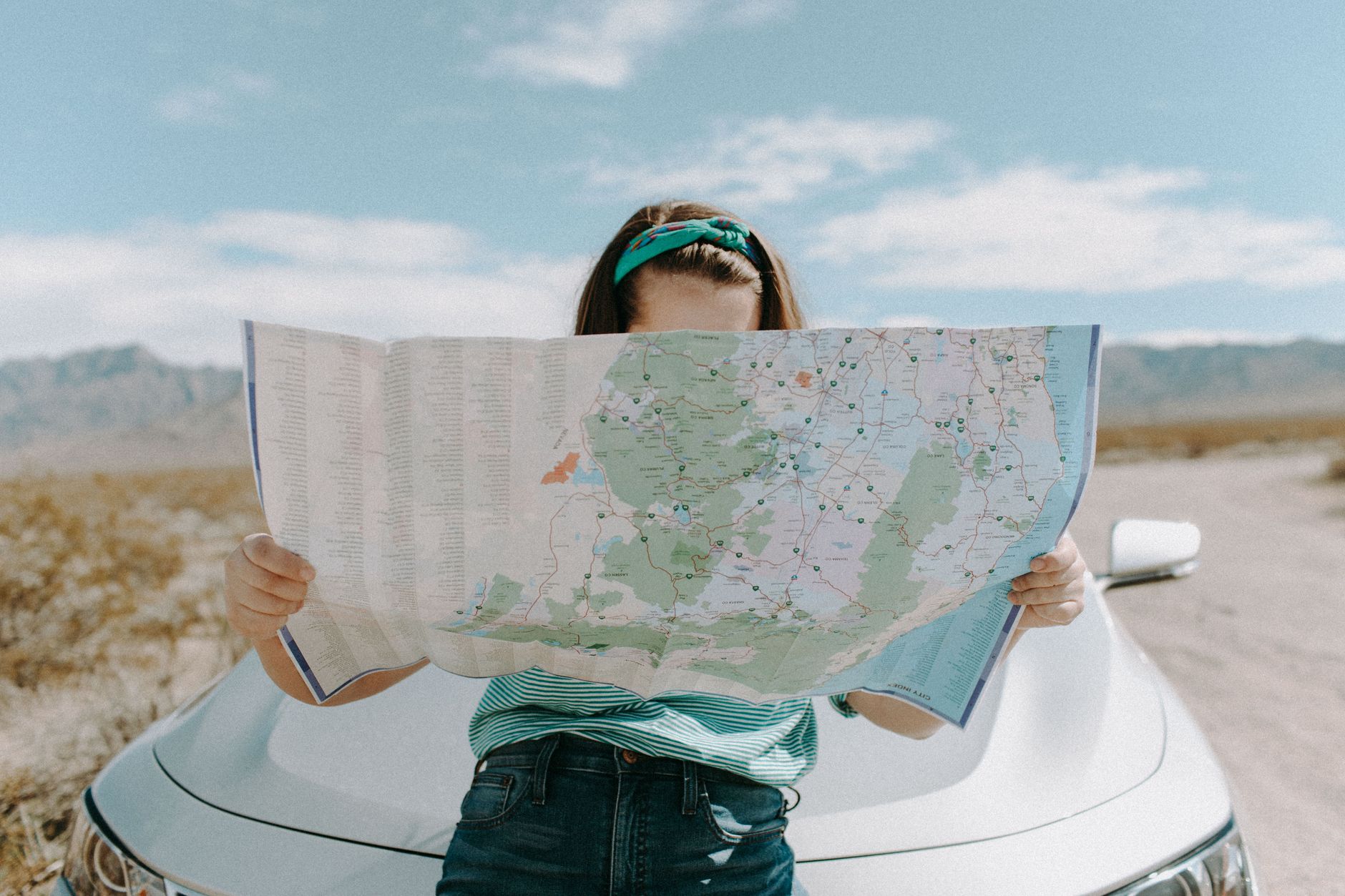
Beyond other people’s maps
When you tell people you’re about to travel somewhere unfamiliar, something interesting happens. They start handing you maps. Some tell you where to go or where not to go. Some share stories about themselves or a friend who once travelled there. Others warn you about everything that could possibly go wrong.
Most of the time they mean well.
The journey I never planned
Earlier this year, I found myself preparing for a journey I had never expected to take. It wasn’t a journey across Australia. It was a medical journey through uncertainty.
As soon as people heard my news, the advice started arriving. They were shocked and immediately began searching for solutions or shared experiences, articles, opinions, tips and recommendations. I understood where it came from. I knew that very response was rooted in kindness. But it didn’t help me.
Looking through their own lens
And then I noticed something surprising. Many of the responses people gave me revealed more about them than about me.
The practical people wanted to know how I would manage work and finances. The deeply emotional people wanted to know how I felt. People who had experienced loss wanted reassurance that I would stay. People who often felt unseen were curious about how others had responded.
Nobody was doing anything wrong. They were simply looking at my situation through the lens of their own life.
Finding my own words
That realisation changed something for me. For a while I tried to explain myself and then I stopped.
Not because I wanted distance from people, but because I needed space to hear my own voice. The road ahead was unfamiliar. I had never travelled it before. No guidebook existed for the exact experience I was having. So I started trusting my instincts.
It reminded me of a day near Orange, in New South Wales. My navigation suggested a shortcut, so I left the main road and followed a route that looked perfectly reasonable on the map. Before I knew it, I was driving along a narrow mountain road with steep drops, no phone reception and nowhere to turn around. The road was simply too narrow. The only option was to keep going. I remember feeling genuinely scared. For nearly half an hour I drove on, hoping I was heading in the right direction. Then the road descended into a valley and, suddenly, a small town appeared in front of me. I have rarely felt so relieved. Looking back, that journey taught me something: when there is no way back, sometimes the only thing you can do is trust yourself and keep moving forward.
The loneliness of an unmapped road
There was a period when I felt very alone. Not because people had forgotten me. In fact, flowers, cards and thoughtful gifts kept arriving. The support was real and generous but there is a particular kind of loneliness that comes from walking a path nobody can walk for you. No amount of advice can remove it. No amount of reassurance can solve it.
Some journeys simply require you to discover your own language before you can continue.
Building a team
During that same period, people kept asking what they could do to help. Could they drive me somewhere? Pick up groceries? Walk the dog? Join me for a coffee? Come with me to an appointment?
At first it felt overwhelming. Then one day I realised I wasn’t surrounded by random offers of help. I was surrounded by a team. People belonged in the “coffee and conversation” team, the “practical support” team or the “health and knowledge” team. And then there was a small inner circle of people who knew me so well that they could understand what I needed, even when I struggled to explain it myself.
Without consciously planning it, I had built an entire support organisation around me.
The right person for the right moment
Once I saw it that way, everything became easier.
I no longer felt responsible for telling everyone the entire story. Instead, I created a personal website where I regularly published blog posts, so I didn’t have to repeat the same conversation over and over again. Writing has always been something I enjoy, and I found it surprisingly therapeutic. As an added benefit, I no longer had to absorb other people’s emotions while I was still trying to understand my own.
Whenever I needed something, I reached out to the right person for a walk, a coffee, practical help or a difficult conversation. Everyone brought something different to my journey. My friends and family each contributed in their own way, doing what they do best. Without realising it, I had assembled my own dream team.
Following your own compass
The surprising thing about travelling alone is that you’re rarely completely alone. Whether you’re crossing Australia in a rental car, sitting in a small-town café or navigating one of life’s unexpected detours, people appear along the way. But nobody can walk the road for you. At some point, you have to fold away everyone else’s maps and follow your own compass.
That’s when the journey truly becomes yours.